
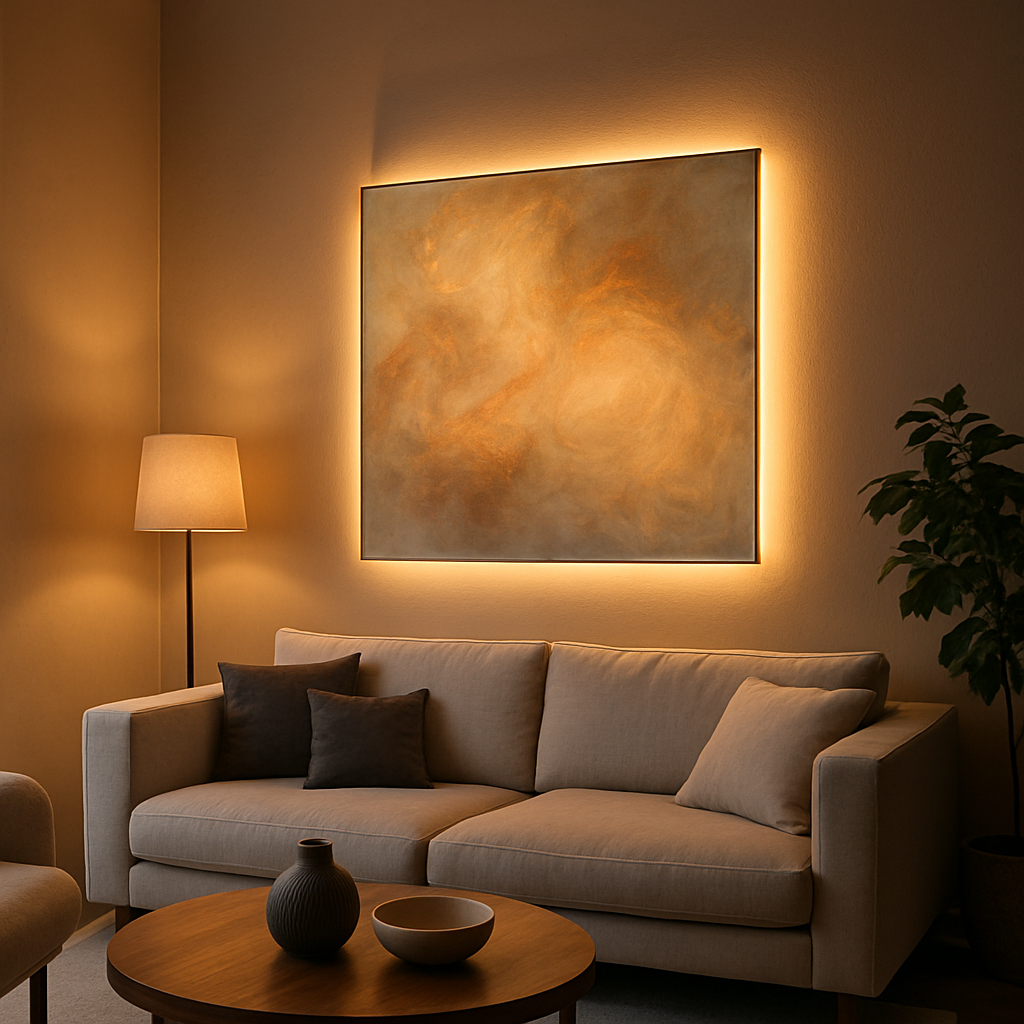
In interior design, the right artwork can completely change how a room feels. Illuminated art stands out because it combines visual impact with practical lighting, helping a space feel more layered, inviting, and intentional. Whether you are decorating a living room, bedroom, hallway, or creative studio, art with lighting can become both a focal point and a mood-setting feature.
From backlit art and LED wall art to expressive neon wall art, these pieces offer more than decoration alone. They interact with the room around them, adding dimension, guiding the eye, and shaping the atmosphere in ways traditional art often cannot.
What Is Illuminated Art in Home Decor?
Illuminated art refers to artwork that includes a built-in light source or is specifically designed to glow, shine, or be enhanced by lighting. In home decor, this can include backlit canvases, wall-mounted light sculptures, neon pieces, and other forms of illuminated wall art.
What makes illuminated art especially effective is its ability to blend beauty and function. Instead of simply hanging on a wall, it changes how the space is experienced. Light can intensify color, soften edges, create contrast, and make artwork feel more dynamic throughout the day and evening.
How Illuminated Art Adds Depth to a Room
One of the biggest advantages of illuminated art for home decor is the sense of depth it creates. Standard wall art can sometimes appear flat, especially in rooms with limited natural light. By contrast, a glowing or backlit piece adds dimension and subtle shadow, making the wall feel more layered.
For example, backlit art can bring out richer tones and create a halo effect that separates the piece from the wall behind it. This extra visual separation helps a room feel more spacious and refined. In darker corners or narrow spaces, lighted wall art can also reduce visual heaviness and make the area feel more open.
If your goal is to create depth, consider placing illuminated art where the room needs more contrast or softness. A carefully positioned piece can help balance shadowy zones while adding warmth and texture.
Using Illuminated Wall Art to Create a Focal Point
Illuminated wall art is especially effective when you want to direct attention. Because the eye naturally moves toward light, these pieces can highlight a key wall, frame a furniture arrangement, or draw attention to architectural details.
For instance, a wall-mounted illuminated sculpture above a console table can pull the eye upward and make the room feel more dynamic. A bold neon installation can define a lounge area, while a subtle LED piece can anchor a minimalist design without overwhelming it.
This makes illuminated art a smart choice for rooms that need stronger visual structure. It can help create pathways for the eye, making the overall design feel more cohesive and intentional.
How Illuminated Art Changes Ambiance
Another major benefit of illuminated art is its effect on mood. The right piece can shift a room from bright and energetic to calm and cozy, depending on the style and intensity of the light. That makes it one of the more flexible home decor lighting ideas for people who want atmosphere without adding another standard lamp or fixture.
Soft-glow pieces work well in bedrooms, reading corners, and living spaces where comfort is the priority. More dramatic lighting can be ideal for entertaining areas, dining rooms, or creative studios. If the artwork includes dimmable or color-changing LEDs, it becomes even more adaptable for different times of day and different uses.
This blend of art and interior design lighting helps a room feel more personal. Instead of lighting being purely functional, it becomes part of the aesthetic story.
Popular Types of Illuminated Art
There is no single style of illuminated art, which is part of its appeal. Some of the most popular options include:
- Backlit art for a soft, elevated glow
- LED wall art for clean, modern interiors
- Neon wall art for bold personality and color
- Lighted wall art with sculptural or mixed-media elements
- Art with integrated lighting for statement-making focal points
Each option creates a different effect. A sleek contemporary room may suit abstract LED pieces, while a more eclectic or playful space may benefit from neon accents. Traditional interiors can also work with illuminated art, especially when the lighting is subtle and complements existing decor rather than dominating it.
How to Use Illuminated Art in Different Spaces
If you are wondering how to use illuminated art effectively, start by thinking about the room’s purpose. In a living room, illuminated art can become the centerpiece above a sofa or sideboard. In a bedroom, it can replace harsher lighting with a more calming glow. In an entryway, it can create an immediate impression while making the space feel more welcoming.
Small rooms can also benefit. Because light helps define edges and create separation, illuminated art can make tighter spaces feel less enclosed. In this way, it is both decorative and spatially useful.
When selecting a piece, consider the room’s overall design style, existing light sources, and color palette. The best results usually come from choosing artwork that enhances the space rather than competes with it. For more decorating inspiration, explore Layer by Layer Prints for ideas that combine art and atmosphere.
Placement Tips and Practical Considerations
Placement matters just as much as style. Rooms with limited natural light often benefit the most from illuminated art, but even bright spaces can use it to create contrast and emphasis. Try positioning the piece where it will be clearly visible at eye level and where its glow will not be blocked by furniture or competing light sources.
It is also important to think about power options. Battery-operated pieces offer flexibility and are easier to move, which can be useful if you like to update your decor seasonally. Plug-in designs may provide more consistent brightness, but they can limit placement unless an outlet is nearby.
Whichever option you choose, the goal is to make the lighting feel integrated into the room rather than added as an afterthought.
Final Thoughts
Illuminated art offers a distinctive way to enhance your home by combining artistic expression with light. It can add depth, create a focal point, and shape the mood of a room with more flexibility than many traditional decor elements. Whether you prefer subtle backlit artwork or bold neon wall art, these pieces can help transform everyday spaces into something more memorable and inviting.
For homeowners, renters, and design enthusiasts alike, illuminated art is a smart way to bring together style, atmosphere, and function in one statement feature.