
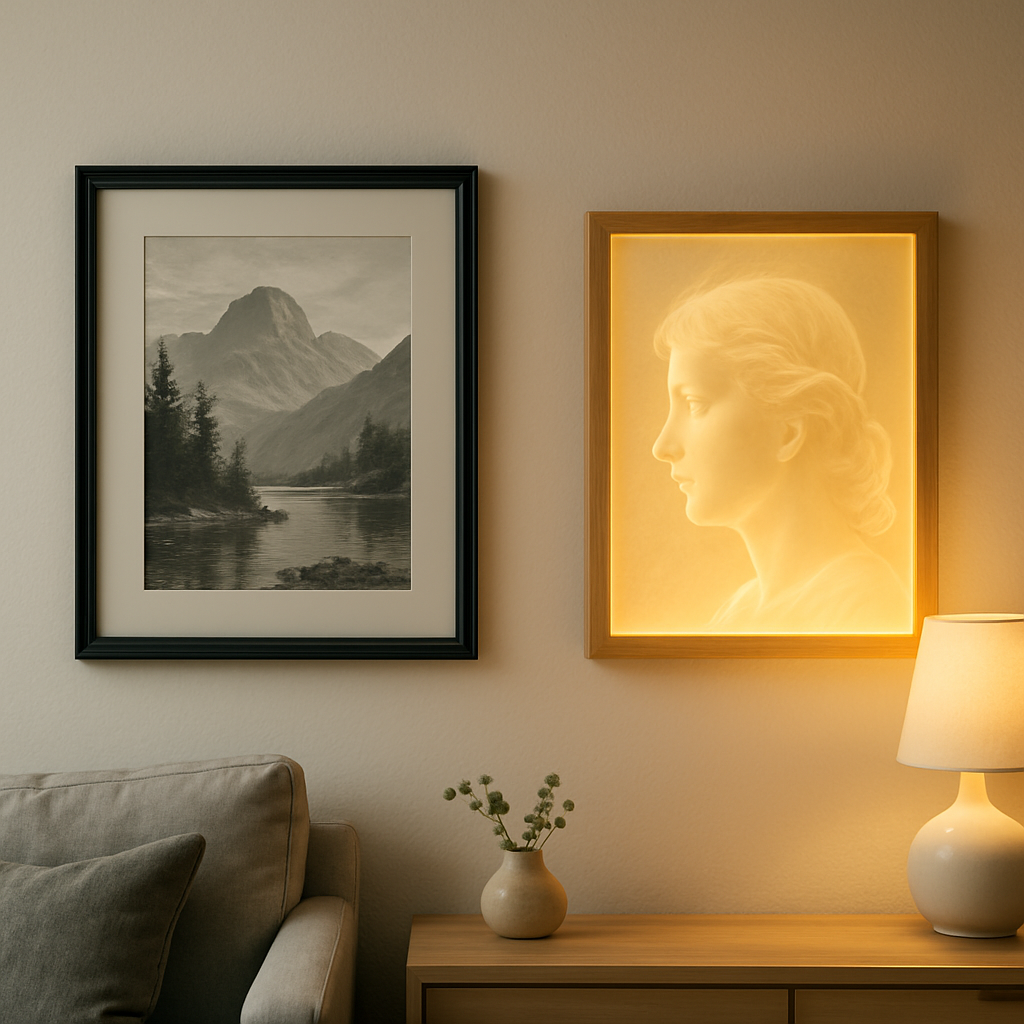
When comparing illuminated lithophane art vs framed art, the biggest difference comes down to how each piece is experienced. Standard framed art is designed to be viewed with ambient light, while illuminated lithophane art depends on backlighting to reveal its image, depth, and detail. Both formats can be beautiful, but they create very different visual effects in a space.
For art buyers, gift shoppers, and home decor enthusiasts, understanding the difference between framed art and illuminated lithophane art can make it easier to choose the right piece for a room, occasion, or personal style.
What Is Standard Framed Art?
Standard framed art refers to traditional artwork displayed within a frame. These pieces are usually created on flat surfaces such as canvas, paper, wood, or photographic media. The frame helps protect the work while also enhancing its presentation.
Framed art includes a wide variety of styles, including paintings, prints, photographs, illustrations, and mixed-media pieces. One of its main strengths is its versatility. It can act as a focal point on a wall, complement surrounding decor, or help tie together a room’s color palette and design style.
Because it does not require special lighting to function, framed art is often one of the easiest and most flexible choices for everyday interior decorating. If you are exploring more art and decor insights, framed art is often the starting point for comparing display styles.
What Is Illuminated Lithophane Art?
Illuminated lithophane art is a specialty art form that reveals an image when light shines through it from behind. Traditionally made from thin porcelain and now also commonly produced in modern materials such as plastic, lithophanes use varying thicknesses to control how much light passes through different areas.
If you have ever wondered what is illuminated lithophane art or how lithophane art works, the answer lies in light transmission. Thinner areas glow more brightly, while thicker areas appear darker. This creates shadows, highlights, and a dimensional image that may be difficult to fully see without illumination.
Once backlit, the artwork takes on a soft, glowing quality that can feel both artistic and atmospheric. This is what makes backlit lithophane art especially distinctive compared with traditional wall pieces.
Illuminated Lithophane Art vs Framed Art: Key Differences
A clear lithophane art comparison shows that these two formats serve different purposes, even though both belong in the broader world of visual art.
1. Visual Experience
Standard framed art presents its composition directly through color, texture, line, and form. Its appearance remains relatively consistent throughout the day, depending only slightly on room lighting.
By contrast, framed art vs lithophane becomes a question of static versus illuminated viewing. Lithophane art changes dramatically when lit. The interaction between light and material reveals hidden detail, tonal variation, and a more sculptural sense of depth.
2. Lighting Requirements
Framed art works well in natural light, overhead lighting, or gallery-style accent lighting. It does not need a dedicated light source to be appreciated.
Illuminated lithophane art, however, is specifically designed to be backlit. Without proper lighting, some of its detail may remain subtle or partially obscured. This makes lighting an essential part of the artwork rather than just a display enhancement.
3. Display Method
Framed art for home decor is easy to place almost anywhere. It can be hung on a wall, propped on a shelf, layered into a gallery wall, or leaned casually on furniture for a relaxed look.
Illuminated lithophane art usually needs a more intentional setup. Many pieces are displayed in front of a light source, within a backlit frame, or as part of a lamp-style presentation. Placement matters more because the lighting setup directly affects how well the image is seen.
4. Mood and Atmosphere
Standard framed art tends to define a room through style, subject matter, and composition. It can be bold, elegant, minimal, traditional, or contemporary, depending on the piece selected.
Illuminated lithophane art adds another layer by contributing ambient light. Its gentle glow can create a calmer, more intimate atmosphere, making it especially effective in bedrooms, living rooms, reading corners, or hospitality spaces.
Which Has Greater Visual Impact?
The answer depends on what kind of impact you want. Standard framed art often makes a strong statement through color, scale, and design presence. It works especially well when you want a polished, classic, or gallery-inspired look.
Illuminated lithophane art stands out because it feels more interactive and unexpected. Viewers are often drawn to its shifting detail and glowing presentation. In that sense, it can feel more immersive than conventional framed pieces.
So in the debate over illuminated lithophane art vs framed art, framed art may win for broad decorating flexibility, while lithophane art often wins for uniqueness and atmosphere.
Best Use Cases for Each Art Style
When Standard Framed Art Makes Sense
- Creating a traditional wall display
- Building a gallery wall
- Matching a wide range of decor styles
- Decorating offices, hallways, living rooms, and public spaces
- Choosing artwork that does not require special setup
When Illuminated Lithophane Art Is a Better Fit
- Adding a decorative light source with artistic value
- Creating ambiance in bedrooms or cozy living spaces
- Giving a memorable and unusual gift
- Choosing unique wall art ideas or conversation pieces
- Highlighting the beauty of light and shadow in art
Is Illuminated Lithophane Art Better Than Framed Art?
Neither is universally better. The better choice depends on your goals. If you want a straightforward, adaptable piece that works in almost any room, standard framed art is usually the more practical option. If you want something more specialized, atmospheric, and visually surprising, illuminated lithophane art may be the stronger choice.
This is why the difference between framed art and illuminated lithophane art matters less as a question of quality and more as a question of function, mood, and display preference.
Final Thoughts on Illuminated Lithophane Art vs Framed Art
Understanding illuminated lithophane art vs framed art helps clarify what each format brings to a space. Standard framed art offers timeless presentation, decorating flexibility, and familiar appeal. Illuminated lithophane art offers a backlit experience that transforms images through light, shadow, and glow.
Both forms have real artistic value. Whether you prefer the classic presence of framed artwork or the luminous charm of lithophane pieces, each can play a meaningful role in home decor, gifting, and art appreciation.